

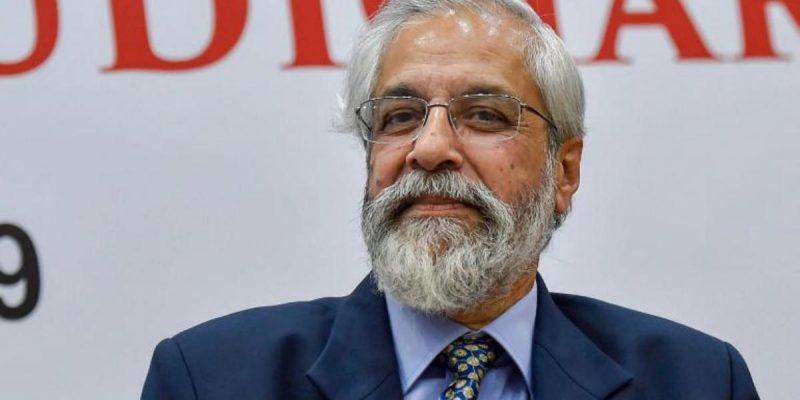
Ex-SC Judge Justice Madan B Lokur has expressed concern over the social media backlash faced by courts, following trolling aimed at a Delhi judge who granted bail to CM Arvind Kejriwal. He emphasized the potential for such online harassment to influence judicial decisions, highlighting broader challenges in maintaining judicial independence amidst digital scrutiny.
Thank you for reading this post, don't forget to subscribe!
BHARAT: In a disturbing trend, judges in India have increasingly become targets of online harassment, especially when they preside over politically sensitive cases. The recent case involving Rouse Avenue Court judge Nyaya Bindu, who granted bail to Delhi Chief Minister Arvind Kejriwal, is a stark example. Judge Bindu faced severe backlash on social media, with accusations ranging from corruption to bribery.
The vitriol included comments like
“Shakal se he corrupt lagti hai” (She looks corrupt),
-posted by an X (formerly Twitter) user named Anita Handa, and another user questioning,
“Was she bribed or rewarded by an American University?”
Demands were made for a joint investigation by top central agencies like the Central Bureau of Investigation (CBI), the National Investigation Agency (NIA), and the Enforcement Directorate (ED).
Some even suggested that Justice Bindu should be imprisoned.
Supreme Court Faces Similar Trolling
Back in May, the Supreme Court was subjected to similar abuse. It was derogatorily referred to as “Supreme Kotha” (Supreme Brothel), and its judges were called “Miya Lord,” a communal slur derived from the respectful term “My Lord” or “M’Lord” used to address judges.
This trolling was triggered by the Supreme Court’s decision to grant bail to Kejriwal during the Lok Sabha elections on May 10. The hashtag #Dogali_Nyay_Vyavastha (originally spelt in Hindi) trended on X for nearly 12 hours with over 200,000 posts.
Coordinated Campaigns and Influencers
Many of these posts appeared to be part of coordinated campaigns. For instance, an X user named Ashok Sharma, known for amplifying right-wing content and followed by many Bharatiya Janata Party leaders, posted “Miya Lord” 132 times in response to various posts.
Following Kejriwal’s bail, controversial social media figure Deepak Sharma urged his followers to tweet against the Supreme Court using the hashtag #Dogali_Naya_Vyavastha. He later celebrated when the hashtag started trending.
Other users did not shy away from using derogatory terms like “jihadi” and “pig” to describe judges.

Social Media Figures Add Fuel to the Fire
On May 10, YouTuber Ajeet Bharti posted a video rant using a meme template from the 2011 film “Ready” to insult the Supreme Court judges who granted bail to Kejriwal in the liquor policy case. Bharti said,
“This is not the judiciary. It is like a room full of jija-sala (brothers-in-law) where dates of hearing are secured by backscratching and bails through lav**pan (a colloquial derogatory term).”
He also falsely claimed that the Orissa High Court commuted the death sentence of a Muslim man in a rape case because he offered namaz five times a day. Although the court did not mention namaz in its order, the judgment did reference a report noting the man’s habit of daily prayers as part of his personality traits.
Historical Trolling Incidents
Judges from all sides of the political spectrum have faced online harassment. Justices Suryakant Sharma and JB Pardiwala were labeled “extremely corrupt,” “bigoted,” “highly entitled,” and “jihadi” for their remarks on former BJP spokesperson Nupur Sharma.
Similarly, former Chief Justice of India Ranjan Gogoi was trolled by accounts sympathetic to Congress and other Opposition parties for his rulings on the Ayodhya Ram Mandir, the abrogation of Article 370, and the Rafale deal.
Supporters of jailed religious leaders Asharam and Rampal also regularly target judges online.
Impact on Judicial Independence
Former Supreme Court judge Justice Madan B Lokur has expressed grave concerns over the impact of such trolling on judicial independence. He described the trend as a “very sad development” that “may influence the judge” while delivering judgments.
Justice Lokur stated,
“These days everything gets politicised and judges are also becoming victims of politicisation. Judgments can and should be critiqued, but judges must be kept out of it.”
He also criticized judges for
“getting politically aligned while on the Bench”
and making
“unnecessary comments during the hearing.”
Historically, the Contempt of Court Act has protected judges from “unfair criticism,” though this legislation has faced significant criticism in recent years. In November 2023, Chief Justice of India DY Chandrachud remarked that the Act was not intended to
“protect a judge from criticism but to prevent individuals from interfering in the dispensation of justice by courts.”
Conclusion
The escalating trend of online harassment and trolling of judges, especially in politically charged cases, poses a significant threat to the independence and impartiality of the judiciary.
While social media offers a platform for public discourse and critique, it also harbors the potential to undermine the very foundation of judicial fairness and objectivity.
As Justice Lokur emphasized, critiquing judgments is essential, but the personal targeting of judges must be unequivocally condemned and addressed.
Click Here to Read Previous Reports on Social Media Harassment
FOLLOW US ON YOUTUBE FOR MORE LEGAL UPDATES
