Attorney General had earlier made submissions on the Governor’s powers in the case, he pointed out that the matter of the President’s role was taken up without directly hearing the President.

NEW DELHI: The Supreme Court of India, in a landmark verdict dated April 8, 2025, has directed that the President must take a decision on any Bill referred to him or her by the Governor within a strict timeline of three months.
This landmark ruling has sparked a constitutional debate, especially concerning the roles of the President and the Governor under Articles 200 and 201 of the Constitution.
Responding to the Supreme Court’s ruling, Attorney General of India R Venkataramani told The Indian Express that the President was not given an opportunity to present her views before the Court passed the order.
“The President was not heard. The President should have been heard (before the court decided on her powers under the Constitution),”
“The President was not in the picture at all.”
Although the Attorney General had earlier made submissions on the Governor’s powers in the case, he pointed out that the matter of the President’s role was taken up without directly hearing the President.
When asked if this could become a ground for the Union Government to seek a review of the judgment, the AG said:
“Not yet decided.”
State Can Move Supreme Court if President Withholds Assent
Top Court said that if the President of India withholds assent (approval) on a bill which has been passed by a state assembly and sent by the state Governor for the President’s consideration, then the state government has the right to directly approach the Supreme Court.
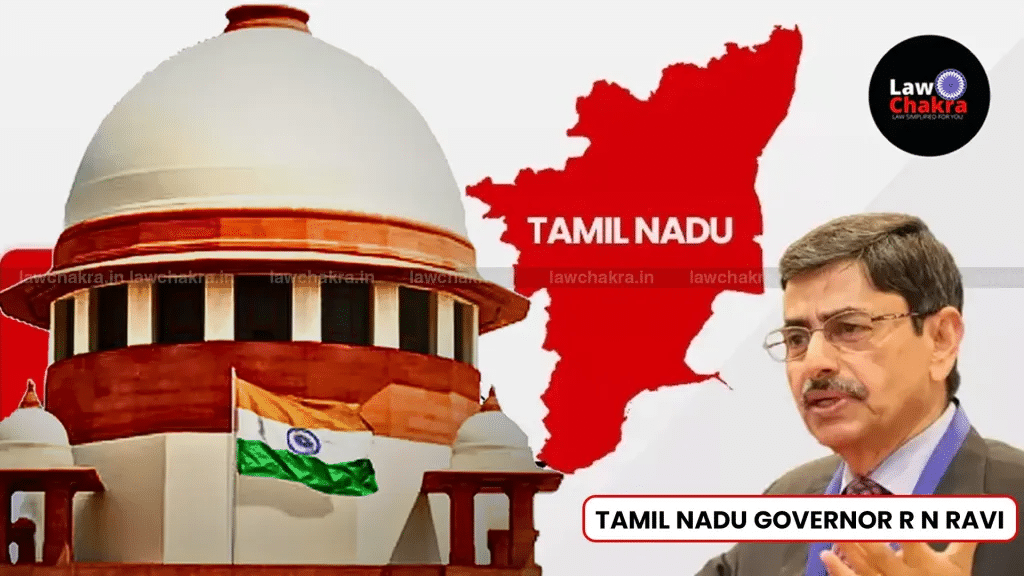
This major judgment came from a bench of Justices J B Pardiwala and R Mahadevan on April 8, in response to a plea by the Tamil Nadu government. The DMK-led Tamil Nadu government had complained about long delays in getting assent for several bills passed by the state assembly.
These bills were sent to Governor R N Ravi, who had then reserved them for the President’s consideration, instead of giving his assent or returning them.
The Supreme Court gave a big relief to the Tamil Nadu government by clearing ten bills that had been stuck. The court also clearly said that Governors must act on bills passed by the state assembly within a reasonable time and cannot delay them unnecessarily.
In the detailed judgment written by Justice Pardiwala, which runs into 415 pages, the court discussed the powers of the Governor under Article 200 and of the President under Article 201 of the Indian Constitution.
Article 200 explains what a Governor can do when a bill is passed by a state assembly – either give assent, withhold assent, or send it to the President. Article 201 explains what happens when the Governor reserves a bill for the President’s consideration.
The court said that the actions of both the Governor and the President related to state bills can be reviewed by the courts under certain situations.
“Where the Governor reserves a bill for the consideration of the President and the President in turn withholds assent thereto then, it shall be open to the State Government to assail such an action before this Court,”
-the court said.
The Supreme Court stressed that these important constitutional powers given to the Governor and President must be used properly and not in an unfair or irresponsible way.
“Where the Governor reserves a bill for the consideration of the President in his own discretion and contrary to the aid and advice tendered to him by the State Council of Ministers, it shall be open to the State Government to assail such an action before the appropriate High Court or this Court,”
-the judgment further said.
The court explained under what conditions a state can challenge such reservations in courts.
“Where the reservation of a bill by the Governor for the consideration of the President is on the grounds of peril to democracy or democratic principles or on other exceptional grounds as mentioned in M.P. Special Police (supra) and Nabam Rebia (supra) then the Governor would be expected to make a specific and clear reference to the President properly indicating the reasons for entertaining such a belief by pinpointing the specific provisions in this regard and the consequent effect that may ensue if such a bill were to be allowed to become a law,”
-the bench said.
The court also said that while sending the bill to the President, the Governor must give a proper explanation and reasoning.
“It shall be open to the state Government to challenge such a reservation on the ground of failure on part of the Governor to furnish the necessary reasons as discussed aforesaid or that the reasons indicated are wholly irrelevant, mala-fide, arbitrary, unnecessary or motivated by extraneous considerations. This being a question completely capable of being determined by the constitutional courts, would be fully justiciable,”
-the judgement said.
The court strongly said that keeping a bill pending or reserving it just because the Governor personally disagrees or due to political reasons is not allowed.
“Reserving a bill on grounds such as ‘personal dissatisfaction of the Governor, political expediency or any other extraneous or irrelevant considerations’ is strictly impermissible by the Constitution and would be liable to be set-aside forthwith on that ground alone,”
-Justice Pardiwala said.
The court also clarified that even if the Governor sends a bill to the President to get special immunity or approval, and then the President withholds assent, the matter can still be checked by the court if it looks like the power was used unfairly.
“Where a State bill has been reserved by the governor for the consideration of the President on the ground that assent of the President is required for the purpose of making the bill enforceable or securing some immunity therefor, then in such cases the withholding of assent by the President would be justiciable to the limited extent of exercise of such power in an arbitrary or mala fide manner. Owing to the political nature of the assent of the President in these categories of bills, the courts would impose a self-restraint,”
-it said.
Further, if the bill looks completely unconstitutional and the President withholds assent for that reason, then the courts can freely look into that matter as a legal question.
“In such cases, it would be prudent for the President to obtain the advisory opinion of this court by way of a reference under Article 143 and act in accordance with the same to dispel any apprehensions of bias, arbitrariness or mala fides,”
-it said.
President’s Role Under Article 201
Senior advocate K K Venugopal, commenting on the constitutional framework, highlighted the limited discretion available to the President.
“In fact, where the Governor has some individual discretion in deciding whether to refer the Bills to the President or not, the President has no such power. She has to go by the aid and advice of the Cabinet.”
This statement clarifies that unlike the Governor, who has some discretionary powers under Article 200, the President must act in accordance with the advice given by the Union Cabinet.
The Supreme Court’s ruling came in response to a case concerning multiple Bills passed by the Tamil Nadu legislature. Senior advocate Rakesh Dwivedi, who represented the Tamil Nadu government, explained that the role of the President under Article 201 was deeply involved in the matter.
“This matter was from Tamil Nadu largely about the power of the Governor under Article 200,” “The Governor had, when the legislature passed the Bill a second time, reserved the Bill again for the consideration of the President. And, therefore, Article 201 (dealing with the powers of the President) also came into consideration. When the Bills were sent to the President, the President granted approval to three of the Bills but seven Bills were kept pending…even the President did not take a final decision on seven Bills. This exercise, which the President had to do, was under Article 201. So Article 201 was very much an issue.”
Although the President was not made a party in the case, Dwivedi noted that the Attorney General had received a court notice. Still, he explained that it might not have been necessary for the Union Government to be formally heard:
“Once the court concluded that reservation for consideration of President by the Governor was itself ultra vires, because on the second round, when he receives the Bill under the first proviso to Article 200, he is bound to grant assent. Then he has no discretion at all…So when he could not have reserved, everything done at the level of the President automatically falls to the ground. In that circumstance, it wasn’t necessary to hear (the President).”
SC Sets Time Limits
The Supreme Court bench of Justices J B Pardiwala and R Mahadevan observed that both the Governor and the President cannot indefinitely delay decisions on Bills. In paragraph 391 of the judgment, the bench referred to two Office Memorandums from the Union Home Ministry that lay out internal timelines for Bill approvals.
“Where the President exhibits inaction in making a decision when a bill is presented to him for assent under Article 201 and such inaction exceeds the time-limit as has been prescribed by us in paragraph 391 of this judgment then it shall be open to the State Government to seek a writ of mandamus from this Court.”
“President is required to take a decision on the bills reserved for his consideration by the Governor within a period of three months from the date on which such reference is received.”
This means that if the President does not act within three months of receiving a Bill from the Governor, the concerned State Government can file a writ petition in the Supreme Court asking for a directive.
Can a writ be issued against the President?
ALSO READ: Supreme Court Steps In: Tamil Nadu vs. Governor Verdict Sparks Judicial Overreach Debate
Issuing a writ of mandamus against the President is legally complex because of Article 361 of the Constitution. This Article provides immunity to the President and Governors:
They “shall not be answerable to any Court for the exercise and performance of the powers and duties of his office or for any act done or purporting to be done by him in the exercise and performance of those powers and duties.”
In practice, courts do not issue notices to the President or Governors directly. Instead, they direct their concerns to the Union Home Ministry (for the President) or the Secretary to the Governor.
Some senior government law officers believe that the Court’s order might upset the delicate balance between different arms of the State.
“One organ of the state is setting timelines for another organ of the state to exercise constitutional powers. This is disturbing,”
Such statements reflect concerns about how far courts should go in directing constitutional authorities like the President or Governor, who are expected to act within the boundaries of their roles under the Constitution.