While speaking to the 6th batch of Rajya Sabha interns, Mr Dhankhar strongly opposed the idea of courts giving directions to the President

NEW DELHI: Vice-President Jagdeep Dhankhar has openly criticised the judiciary just days after the Supreme Court passed a landmark judgment that effectively set a timeline for the President and Governors to approve or act on Bills passed by state legislatures.
While speaking to the 6th batch of Rajya Sabha interns, Mr Dhankhar strongly opposed the idea of courts giving directions to the President.
He said:
“We cannot have a situation where courts direct the President.”
He also raised concerns over Article 142 of the Constitution, which grants the Supreme Court special powers to deliver complete justice in any case. According to him, this Article is now being used excessively:
“Article 142 of the Constitution… has become a nuclear missile against democratic forces, available to the judiciary 24×7.”
Mr Dhankhar also referred to a serious matter involving a massive cash recovery from the home of Delhi High Court Judge Yashwant Varma. He questioned the delay in disclosure and action by authorities:
“An event happened on the night of 14th and 15th of March in New Delhi, at the residence of a judge. For seven days, no one knew about it. We have to ask questions to ourselves. Is the delay explainable? Condonable? Does it not raise certain fundamental questions? In any ordinary situation, and ordinary situations define rule of law – things would have been different. It was only on 21st March, disclosed by a newspaper, that people of the country were shocked as never before.”
Mr Dhankhar added that it was only after the news became public that any official input came from the Supreme Court, and it confirmed that something was definitely wrong:
“Thereafter, fortunately, in public domain, we had input from authoritative source, the Supreme Court of India. And the input indicated culpability. Input did not lead to doubt that something was amiss. Something required to be investigated. Now the nation waits with bated breath. The nation is restive because one of our institutions, to which people have looked up always with highest respect and deference, was put in the dock.”
The Vice-President expressed serious concern that even after such a shocking event, no FIR (First Information Report) was registered against the judge. He pointed out that an FIR can be filed against anyone in India, including the Vice-President himself, without any special permission:
“An FIR in this country can be registered against anyone, any Constitutional functionary, including the one before you. One has only to activate the rule of law. No permission is required. But if it is Judges, their category, FIR cannot be straightaway registered. It has to be approved by the concerned in the Judiciary, but that is not given in the Constitution.”
ALSO READ: BJP-Led Delhi Government Withdrawing Court Cases Against Lieutenant Governor
He further questioned how judges seem to enjoy a special kind of immunity that is not even given to most constitutional functionaries:
“The Constitution of India has accorded immunity from prosecution only to the Honourable President and the Honourable Governors. So how come a category beyond law has secured this immunity? Because the ill-effects of this are being felt in the mind of one and all. Every Indian, young and old, is deeply concerned. If the event had taken place at his house, the speed would have been an electronic rocket. Now it is not even a cattle cart.”
Mr Dhankhar, a former lawyer who practised in the Rajasthan High Court and the Supreme Court, has been openly critical of certain judicial trends in the past. His recent remarks come at a time when tensions between the judiciary and the executive are visible, especially after the Supreme Court’s decision aiming to make Governors and the President more accountable regarding Bills passed by legislatures.

The Supreme Court of India, in a landmark verdict dated April 8, 2025, has directed that the President must take a decision on any Bill referred to him or her by the Governor within a strict timeline of three months.
This landmark ruling has sparked a constitutional debate, especially concerning the roles of the President and the Governor under Articles 200 and 201 of the Constitution.
Responding to the Supreme Court’s ruling, Attorney General of India R Venkataramani told The Indian Express that the President was not given an opportunity to present her views before the Court passed the order.
“The President was not heard. The President should have been heard (before the court decided on her powers under the Constitution),”
“The President was not in the picture at all.”
Although the Attorney General had earlier made submissions on the Governor’s powers in the case, he pointed out that the matter of the President’s role was taken up without directly hearing the President.
When asked if this could become a ground for the Union Government to seek a review of the judgment, the AG said:
“Not yet decided.”
State Can Move Supreme Court if President Withholds Assent
Top Court said that if the President of India withholds assent (approval) on a bill which has been passed by a state assembly and sent by the state Governor for the President’s consideration, then the state government has the right to directly approach the Supreme Court.
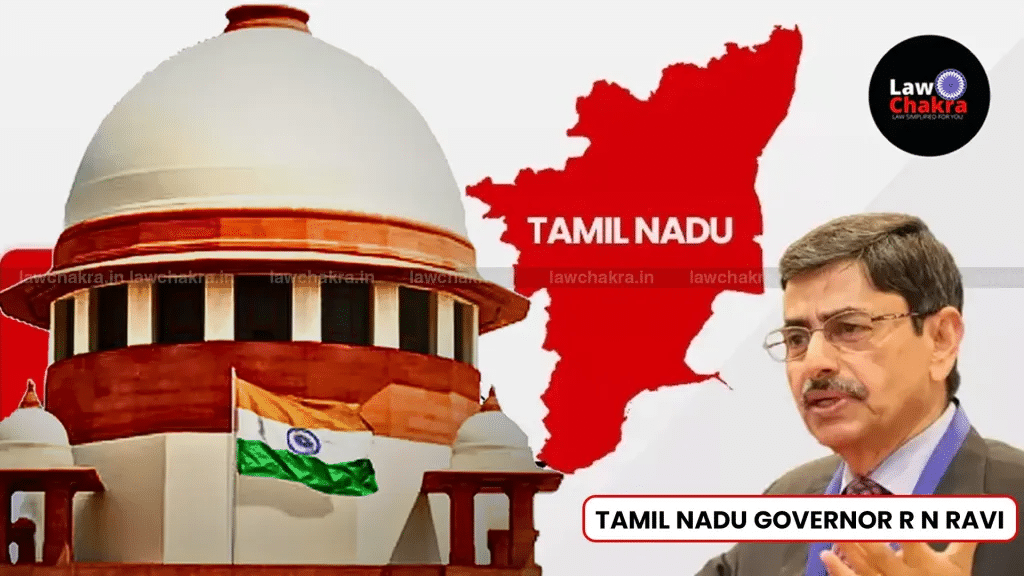
This major judgment came from a bench of Justices J B Pardiwala and R Mahadevan on April 8, in response to a plea by the Tamil Nadu government. The DMK-led Tamil Nadu government had complained about long delays in getting assent for several bills passed by the state assembly.
These bills were sent to Governor R N Ravi, who had then reserved them for the President’s consideration, instead of giving his assent or returning them.
The Supreme Court gave a big relief to the Tamil Nadu government by clearing ten bills that had been stuck. The court also clearly said that Governors must act on bills passed by the state assembly within a reasonable time and cannot delay them unnecessarily.
In the detailed judgment written by Justice Pardiwala, which runs into 415 pages, the court discussed the powers of the Governor under Article 200 and of the President under Article 201 of the Indian Constitution.
Article 200 explains what a Governor can do when a bill is passed by a state assembly – either give assent, withhold assent, or send it to the President. Article 201 explains what happens when the Governor reserves a bill for the President’s consideration.
The court said that the actions of both the Governor and the President related to state bills can be reviewed by the courts under certain situations.
“Where the Governor reserves a bill for the consideration of the President and the President in turn withholds assent thereto then, it shall be open to the State Government to assail such an action before this Court,”
-the court said.
The Supreme Court stressed that these important constitutional powers given to the Governor and President must be used properly and not in an unfair or irresponsible way.
“Where the Governor reserves a bill for the consideration of the President in his own discretion and contrary to the aid and advice tendered to him by the State Council of Ministers, it shall be open to the State Government to assail such an action before the appropriate High Court or this Court,”
-the judgment further said.
The court explained under what conditions a state can challenge such reservations in courts.
“Where the reservation of a bill by the Governor for the consideration of the President is on the grounds of peril to democracy or democratic principles or on other exceptional grounds as mentioned in M.P. Special Police (supra) and Nabam Rebia (supra) then the Governor would be expected to make a specific and clear reference to the President properly indicating the reasons for entertaining such a belief by pinpointing the specific provisions in this regard and the consequent effect that may ensue if such a bill were to be allowed to become a law,”
-the bench said.
The court also said that while sending the bill to the President, the Governor must give a proper explanation and reasoning.
“It shall be open to the state Government to challenge such a reservation on the ground of failure on part of the Governor to furnish the necessary reasons as discussed aforesaid or that the reasons indicated are wholly irrelevant, mala-fide, arbitrary, unnecessary or motivated by extraneous considerations. This being a question completely capable of being determined by the constitutional courts, would be fully justiciable,”
-the judgement said.
The court strongly said that keeping a bill pending or reserving it just because the Governor personally disagrees or due to political reasons is not allowed.
“Reserving a bill on grounds such as ‘personal dissatisfaction of the Governor, political expediency or any other extraneous or irrelevant considerations’ is strictly impermissible by the Constitution and would be liable to be set-aside forthwith on that ground alone,”
-Justice Pardiwala said.
The court also clarified that even if the Governor sends a bill to the President to get special immunity or approval, and then the President withholds assent, the matter can still be checked by the court if it looks like the power was used unfairly.
“Where a State bill has been reserved by the governor for the consideration of the President on the ground that assent of the President is required for the purpose of making the bill enforceable or securing some immunity therefor, then in such cases the withholding of assent by the President would be justiciable to the limited extent of exercise of such power in an arbitrary or mala fide manner. Owing to the political nature of the assent of the President in these categories of bills, the courts would impose a self-restraint,”
-it said.
Further, if the bill looks completely unconstitutional and the President withholds assent for that reason, then the courts can freely look into that matter as a legal question.
“In such cases, it would be prudent for the President to obtain the advisory opinion of this court by way of a reference under Article 143 and act in accordance with the same to dispel any apprehensions of bias, arbitrariness or mala fides,”
-it said.