

Vice President of India and Chairman of the Rajya Sabha, Jagdeep Dhankhar clarified that he respects the separation of powers, where Parliament makes laws and the judiciary delivers judgments. However, he raised concerns about the judiciary allegedly overstepping into executive territory.

Vice President of India and Chairman of the Rajya Sabha, Jagdeep Dhankhar, strongly criticised the judiciary on Thursday, saying that judges in India are not held accountable and the law of the land seems not to apply to them.
He was addressing the valedictory function of the 6th Rajya Sabha Internship Programme at the Vice-President’s Enclave.
Dhankhar’s remarks came in the backdrop of a recent Supreme Court judgement concerning the powers of the President and Governors in relation to approving bills passed by the legislature. This decision was made by a bench consisting of Justices JB Pardiwala and R Mahadevan.
Expressing concern over the judiciary stepping into the domain of the executive and legislature, Dhankhar remarked:
“There is a directive to the President by a recent judgement. Where are we heading? What is happening in the country? We have to be extremely sensitive. It is not a question of someone filing a review or not. We never bargained for democracy for this day. President being called upon to decide in a time-bound manner and if not, it becomes law. So we have judges who will legislate, who will perform executive functions, who will act as super Parliament and absolutely have no accountability because law of the land does not apply to them.”
He clarified that he respects the separation of powers, where Parliament makes laws and the judiciary delivers judgments. However, he raised concerns about the judiciary allegedly overstepping into executive territory.
“I have no doubt parliament cannot script a judgement of a court. I have no doubt about it. Parliament can only legislate and hold institutions including Judiciary and Executive accountable, but judgement writing, adjudication is the sole prerogative of judiciary as much legislation is that of the parliament. But are we not finding this situation getting challenged? I am saying so because very frequently we are finding that executive governance is by judicial orders, when executive, the government is elected by people, the government is accountable to parliament, the government is accountable to the people at election. There is a principle of accountability in operation. In parliament you can ask questions, critical questions, because the governance is by the executive but if this executive governance is by judiciary, how do you ask questions? Whom do you hold accountable in election?”
He warned that any institution crossing into another’s jurisdiction creates confusion and disorder.
“Any incursion by one institution into the domain of the other poses a challenge ‘which is not good’.”
The Supreme Court of India, in a landmark verdict dated April 8, 2025, has directed that the President must take a decision on any Bill referred to him or her by the Governor within a strict timeline of three months.
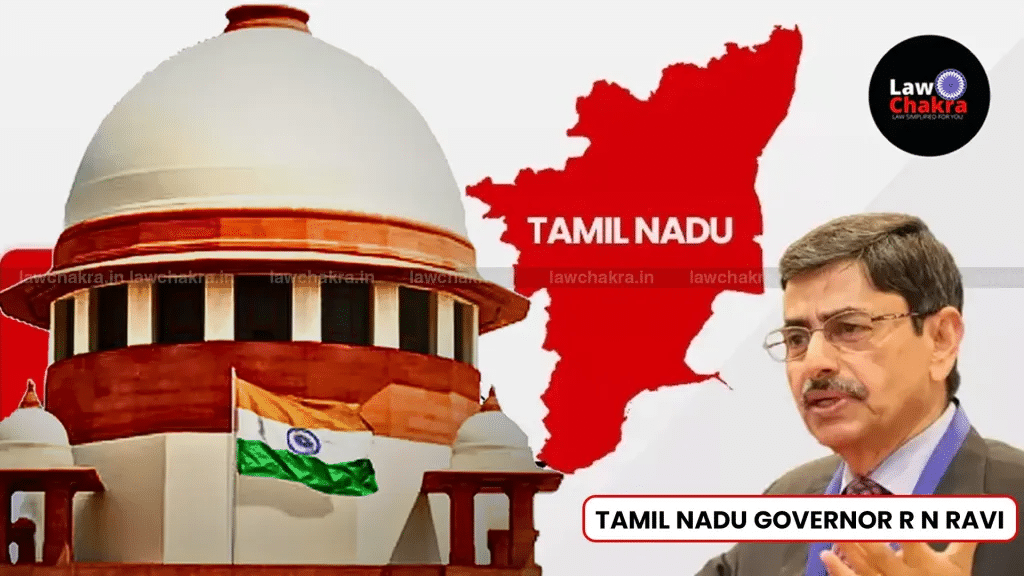
This landmark ruling has sparked a constitutional debate, especially concerning the roles of the President and the Governor under Articles 200 and 201 of the Constitution.
Responding to the Supreme Court’s ruling, Attorney General of India R Venkataramani told The Indian Express that the President was not given an opportunity to present her views before the Court passed the order.
“The President was not heard. The President should have been heard (before the court decided on her powers under the Constitution),”
“The President was not in the picture at all.”
Dhankhar Questions Supreme Court’s Use of Article 142
Dhankhar also criticised the Supreme Court’s frequent use of Article 142 of the Constitution, which grants it special powers to ensure complete justice in any case.
“Article 142 of the Constitution, which gives the Supreme Court special powers, ‘has become a nuclear missile against democratic forces, available to the judiciary 24×7,’ he stated.”
On Justice Yashwant Varma
He also referred to a controversy involving Justice Yashwant Varma, where a large amount of cash was allegedly found at the judge’s residence. Dhankhar questioned how a judicial inquiry committee was investigating the matter without even an FIR (First Information Report) being filed.
“It is now over a month, even if it is can of worms, even if there are skeletons in the cupboard, time to blow up the can … time for the cupboard to collapse. Let the worms and skeletons in public domain so that cleansing takes place,” he said.
Though he said he did not intend to target any individual personally, Dhankhar insisted that criminal investigation is necessary.
“No investigation under law is in progress at the moment because for a criminal investigation, the initiation has to be by an FIR. First Information Report. It is not there. Every cognizable is required to be reported to the police and failure to a cognizable offence is a crime,” he pointed out.
He also mentioned that even constitutional authorities can be subjected to an FIR, although for judges, special permission is required.
“An FIR in this country can be registered against anyone, any constitutional functionary including the one before you. One has only to activate the rule of law no permission is required but if it is judges their category … FIR cannot be straightway registered. It has to be approved by the concerned in judiciary but that is not given in the Constitution. Constitution of India has accorded immunity from prosecution only to the Hon’ble President and the Hon’ble Governors so how come a category beyond law has secured this immunity because the ill effects of this are being felt in the mind of one and all.”
Commenting on the internal investigation committee formed by the Supreme Court to look into the Justice Varma issue, Dhankhar questioned its legal validity.
ALSO READ: Plea in Allahabad High Court: ‘Withhold Oath of Justice Yashwant Varma’
“A question we must think, there is a committee of three judges investigating the matter but investigation is domain of the executive. Investigation is not the domain of judiciary. Is the committee under constitution of India? No. Is this committee of three judges having any sanction under any law emanating from Parliament? No. What can the committee do, committee can at the most make a recommendation. Recommendation to whom and for what? The kind of mechanism we have for judges, the only action finally that can be taken is by the Parliament, when proceedings of removal are initiated. A month has passed more than that and investigation requires speed, expedition, preservation of incriminating material. As a citizen of the country and holding position which I do, I am concerned. Are we not diluting rule of law? Are we not answerable to? ‘We the people’ who gave us the Constitution.”
Dhankhar concluded his remarks by calling on all institutions and stakeholders to look at this issue seriously and treat it as a test case for the rule of law and constitutional boundaries.
“What legitimacy and jurisdictional authority does this committee possess. Can we have separate law made by a category and the law made by that category dehors constitution, dehors Parliament. The committee report according to me inherently lacks legal standing,” he concluded.
FOLLOW US FOR MORE LEGAL UPDATES ON YOUTUBE
