

Sibal reminded the Vice President that both Governors and the President are bound to act on the ‘aid and advice’ of the council of ministers, as per the Constitution.

Senior advocate and Rajya Sabha MP Kapil Sibal has strongly criticised Vice President Jagdeep Dhankhar for his comments on the Supreme Court’s recent judgement related to Tamil Nadu Governor RN Ravi withholding assent to bills passed by the state legislature.
Sibal reminded the Vice President that both Governors and the President are bound to act on the ‘aid and advice’ of the council of ministers, as per the Constitution.
His response came shortly after Dhankhar raised concerns over the Supreme Court directing the President, claiming the judiciary was acting like a “super parliament.”
He was addressing the valedictory function of the 6th Rajya Sabha Internship Programme at the Vice-President’s Enclave.
Dhankhar’s remarks came in the backdrop of a recent Supreme Court judgement concerning the powers of the President and Governors in relation to approving bills passed by the legislature. This decision was made by a bench consisting of Justices JB Pardiwala and R Mahadevan.
Expressing concern over the judiciary stepping into the domain of the executive and legislature, Dhankhar remarked:
“There is a directive to the President by a recent judgement. Where are we heading? What is happening in the country? We have to be extremely sensitive. It is not a question of someone filing a review or not. We never bargained for democracy for this day. President being called upon to decide in a time-bound manner and if not, it becomes law. So we have judges who will legislate, who will perform executive functions, who will act as super Parliament and absolutely have no accountability because law of the land does not apply to them.”
He clarified that he respects the separation of powers, where Parliament makes laws and the judiciary delivers judgments. However, he raised concerns about the judiciary allegedly overstepping into executive territory.
“I have no doubt parliament cannot script a judgement of a court. I have no doubt about it. Parliament can only legislate and hold institutions including Judiciary and Executive accountable, but judgement writing, adjudication is the sole prerogative of judiciary as much legislation is that of the parliament. But are we not finding this situation getting challenged? I am saying so because very frequently we are finding that executive governance is by judicial orders, when executive, the government is elected by people, the government is accountable to parliament, the government is accountable to the people at election. There is a principle of accountability in operation. In parliament you can ask questions, critical questions, because the governance is by the executive but if this executive governance is by judiciary, how do you ask questions? Whom do you hold accountable in election?”
He warned that any institution crossing into another’s jurisdiction creates confusion and disorder.
“Any incursion by one institution into the domain of the other poses a challenge ‘which is not good’.”
Dhankhar Questions Supreme Court’s Use of Article 142
Dhankhar also criticised the Supreme Court’s frequent use of Article 142 of the Constitution, which grants it special powers to ensure complete justice in any case.
“Article 142 of the Constitution, which gives the Supreme Court special powers, ‘has become a nuclear missile against democratic forces, available to the judiciary 24×7,’ he stated.”
The Supreme Court of India, in a landmark verdict dated April 8, 2025, has directed that the President must take a decision on any Bill referred to him or her by the Governor within a strict timeline of three months.
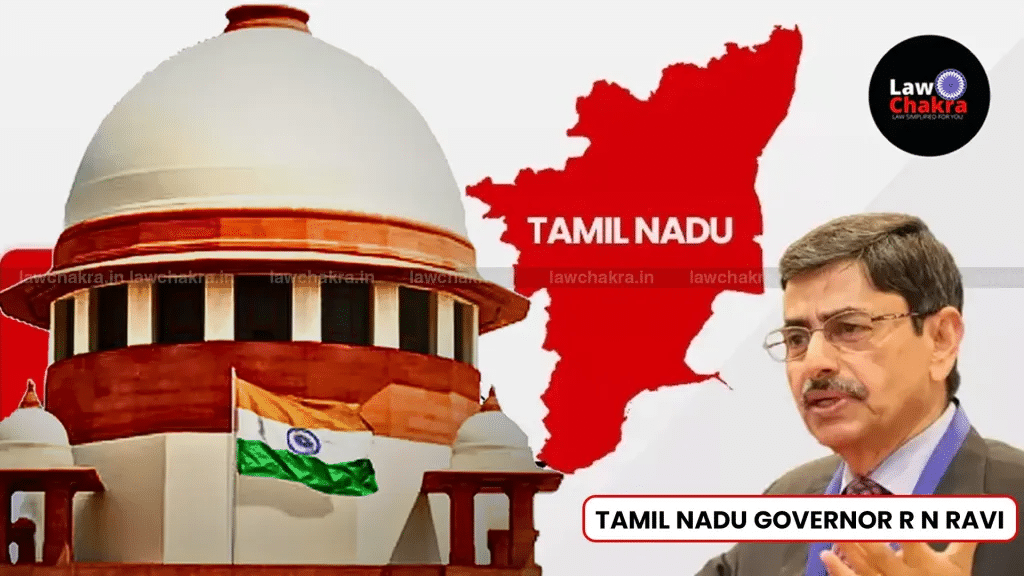
This landmark ruling has sparked a constitutional debate, especially concerning the roles of the President and the Governor under Articles 200 and 201 of the Constitution.
Kapil Sibal didn’t mince words while reacting to Dhankhar’s remarks.
Referring to the Governor withholding bills, he said:
“This is in fact an intrusion on the supremacy of the legislature, yeh to ulti baat hai (the issue is flipped). If Parliament passes a bill, can the President indefinitely delay its implementation? Even if it is not signed, does no one have the right to talk about it?”
He further criticised the Vice President for questioning the court’s ruling, stating:
“This should be known to Dhankar ji (Vice President), he asks how the powers of the president can be curtailed, but who is curtailing the powers? I say that a minister should go to the Governor and be there for two years, so they can raise issues which are of public importance, will the Governor be able to ignore them?”
Sibal, who also serves as the President of the Supreme Court Bar Association, highlighted that withholding bills passed by an elected legislature is unconstitutional and disrupts democratic functioning.
Vice President Jagdeep Dhankhar had earlier expressed serious concerns over the Supreme Court’s judgement during an interaction with Rajya Sabha interns. He accused the judiciary of overstepping its authority and taking on the roles of the executive and legislature. He said:
“There is a directive to the president by a recent judgment. Where are we heading? What is happening in the country? We have to be extremely sensitive. It is not a question of someone filing a review or not. We never bargained for democracy for this day.”
Dhankhar also stated that some judges were acting beyond their constitutional role:
“Certain judges are ‘legislating,’ performing ‘executive functions’ and acting as a ‘Super Parliament.'”
He added that while the Constitution does allow the Supreme Court to interpret laws, such power must be used within the boundaries of the law, pointing out:
“The Constitution gives the power to the Supreme Court to interpret the law, but that bench will require five judges.”
FOLLOW US FOR MORE LEGAL UPDATES ON YOUTUBE
