

Now, Governor Thawar Chand Gehlot has sent the bill to the President, raising a constitutional concern.

Karnataka: In Karnataka, a new bill passed by the state government to provide reservation for Muslims in government contracts has now been sent to President Droupadi Murmu for her approval.
The bill – called the Transparency in Public Procurements (Amendment) Bill, 2025 – was recently passed in both Houses of the Karnataka State Legislature, even though the BJP opposed it. However, it still needed the Governor’s assent to become law.
Now, Governor Thawar Chand Gehlot has sent the bill to the President, raising a constitutional concern.
He pointed out that “the Constitution doesn’t allow for reservations based on religion.”
The bill proposes that 4% of government contracts be reserved for Muslims. This would include:
- Civil works contracts worth up to Rs.2 crore, and
- Procurement of goods and services up to Rs.1 crore.
The BJP has sharply criticised the move, calling it an example of “appeasement politics“ by the ruling Congress government.
However, Chief Minister Siddaramaiah has firmly defended the bill. Speaking at an event to mark Ambedkar Jayanti in Bengaluru on Tuesday, Siddaramaiah said the Congress party is committed to uplifting people who are economically and socially backward.
He said, “Giving strength to anyone who is economically and socially weak, is the mission and commitment of the Congress party.”
He also added, “I stand with those who have been deprived of opportunities and those who haven’t got justice.”
Siddaramaiah further explained how the reservation system in government contracts has expanded over time to support disadvantaged communities.
He stated, “To give strength to Dalits, backward classes and minorities, economically and socially, we have given reservation in contracts.”
The Chief Minister recalled earlier changes he made during his term, saying, “First I did it (for contracts) up to Rs. 50 lakh, then increased it to Rs. 1 crore. Now we have made it up to Rs.2 crore – for OBC Category 1, 2A, and also 2B which is Muslims.”
He criticised the BJP’s response, remarking, “They (BJP) made it a big issue alleging appeasement.”
Similar Situation in Tamil Nadu
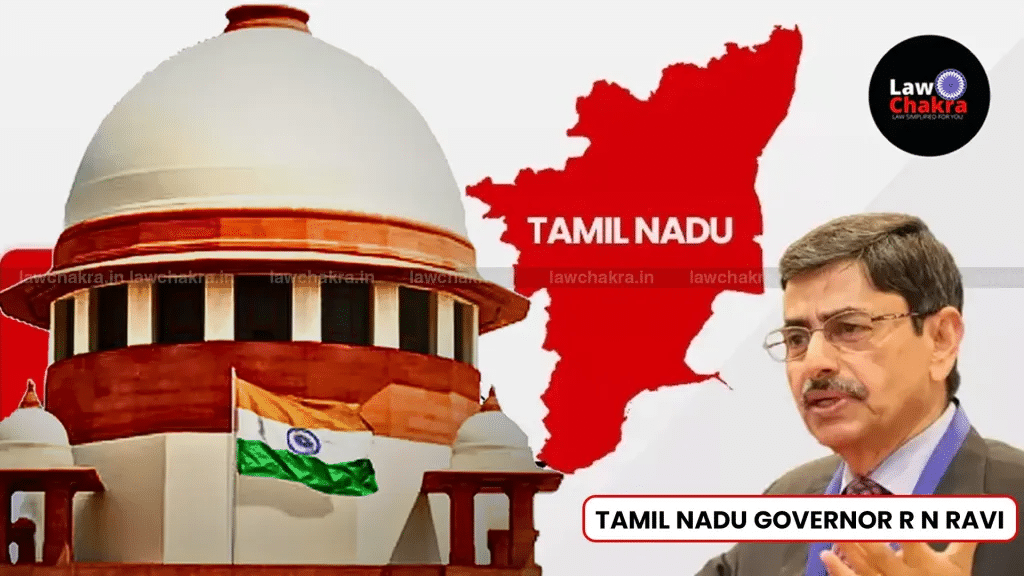
A similar issue has been unfolding in Tamil Nadu, where Governor R.N. Ravi has been withholding or delaying assent to several state bills passed by the Tamil Nadu Assembly. These include key legislations related to social justice, state universities, and law and order.
The DMK government, led by Chief Minister M.K. Stalin, has accused the Governor of acting with political bias and attempting to block progressive legislation.
This confrontation led the Tamil Nadu government to approach the Supreme Court, which recently said Governors must not sit on bills indefinitely. The court reminded Governors that their role is not political, and delays in giving assent violate the constitutional spirit of federalism.
The Supreme Court of India, in a landmark verdict dated April 8, 2025, has directed that the President must take a decision on any Bill referred to him or her by the Governor within a strict timeline of three months.
This landmark ruling has sparked a constitutional debate, especially concerning the roles of the President and the Governor under Articles 200 and 201 of the Constitution.
Responding to the Supreme Court’s ruling, Attorney General of India R Venkataramani told The Indian Express that the President was not given an opportunity to present her views before the Court passed the order.
“The President was not heard. The President should have been heard (before the court decided on her powers under the Constitution),”
“The President was not in the picture at all.”
Although the Attorney General had earlier made submissions on the Governor’s powers in the case, he pointed out that the matter of the President’s role was taken up without directly hearing the President.
When asked if this could become a ground for the Union Government to seek a review of the judgment, the AG said:
“Not yet decided.”
State Can Move Supreme Court if President Withholds Assent
Top Court said that if the President of India withholds assent (approval) on a bill which has been passed by a state assembly and sent by the state Governor for the President’s consideration, then the state government has the right to directly approach the Supreme Court.
This major judgment came from a bench of Justices J B Pardiwala and R Mahadevan on April 8, in response to a plea by the Tamil Nadu government. The DMK-led Tamil Nadu government had complained about long delays in getting assent for several bills passed by the state assembly.
These bills were sent to Governor R N Ravi, who had then reserved them for the President’s consideration, instead of giving his assent or returning them.
The Supreme Court gave a big relief to the Tamil Nadu government by clearing ten bills that had been stuck. The court also clearly said that Governors must act on bills passed by the state assembly within a reasonable time and cannot delay them unnecessarily.
In the detailed judgment written by Justice Pardiwala, which runs into 415 pages, the court discussed the powers of the Governor under Article 200 and of the President under Article 201 of the Indian Constitution.
Article 200 explains what a Governor can do when a bill is passed by a state assembly – either give assent, withhold assent, or send it to the President. Article 201 explains what happens when the Governor reserves a bill for the President’s consideration.
The court said that the actions of both the Governor and the President related to state bills can be reviewed by the courts under certain situations.
“Where the Governor reserves a bill for the consideration of the President and the President in turn withholds assent thereto then, it shall be open to the State Government to assail such an action before this Court,”
-the court said.
The Supreme Court stressed that these important constitutional powers given to the Governor and President must be used properly and not in an unfair or irresponsible way.
“Where the Governor reserves a bill for the consideration of the President in his own discretion and contrary to the aid and advice tendered to him by the State Council of Ministers, it shall be open to the State Government to assail such an action before the appropriate High Court or this Court,”
-the judgment further said.
The court explained under what conditions a state can challenge such reservations in courts.
“Where the reservation of a bill by the Governor for the consideration of the President is on the grounds of peril to democracy or democratic principles or on other exceptional grounds as mentioned in M.P. Special Police (supra) and Nabam Rebia (supra) then the Governor would be expected to make a specific and clear reference to the President properly indicating the reasons for entertaining such a belief by pinpointing the specific provisions in this regard and the consequent effect that may ensue if such a bill were to be allowed to become a law,”
-the bench said.
The court also said that while sending the bill to the President, the Governor must give a proper explanation and reasoning.
“It shall be open to the state Government to challenge such a reservation on the ground of failure on part of the Governor to furnish the necessary reasons as discussed aforesaid or that the reasons indicated are wholly irrelevant, mala-fide, arbitrary, unnecessary or motivated by extraneous considerations. This being a question completely capable of being determined by the constitutional courts, would be fully justiciable,”
-the judgement said.
The court strongly said that keeping a bill pending or reserving it just because the Governor personally disagrees or due to political reasons is not allowed.
“Reserving a bill on grounds such as ‘personal dissatisfaction of the Governor, political expediency or any other extraneous or irrelevant considerations’ is strictly impermissible by the Constitution and would be liable to be set-aside forthwith on that ground alone,”
-Justice Pardiwala said.
The court also clarified that even if the Governor sends a bill to the President to get special immunity or approval, and then the President withholds assent, the matter can still be checked by the court if it looks like the power was used unfairly.
“Where a State bill has been reserved by the governor for the consideration of the President on the ground that assent of the President is required for the purpose of making the bill enforceable or securing some immunity therefor, then in such cases the withholding of assent by the President would be justiciable to the limited extent of exercise of such power in an arbitrary or mala fide manner. Owing to the political nature of the assent of the President in these categories of bills, the courts would impose a self-restraint,”
-it said.
Further, if the bill looks completely unconstitutional and the President withholds assent for that reason, then the courts can freely look into that matter as a legal question.
“In such cases, it would be prudent for the President to obtain the advisory opinion of this court by way of a reference under Article 143 and act in accordance with the same to dispel any apprehensions of bias, arbitrariness or mala fides,”
-it said.